Dive Brief:
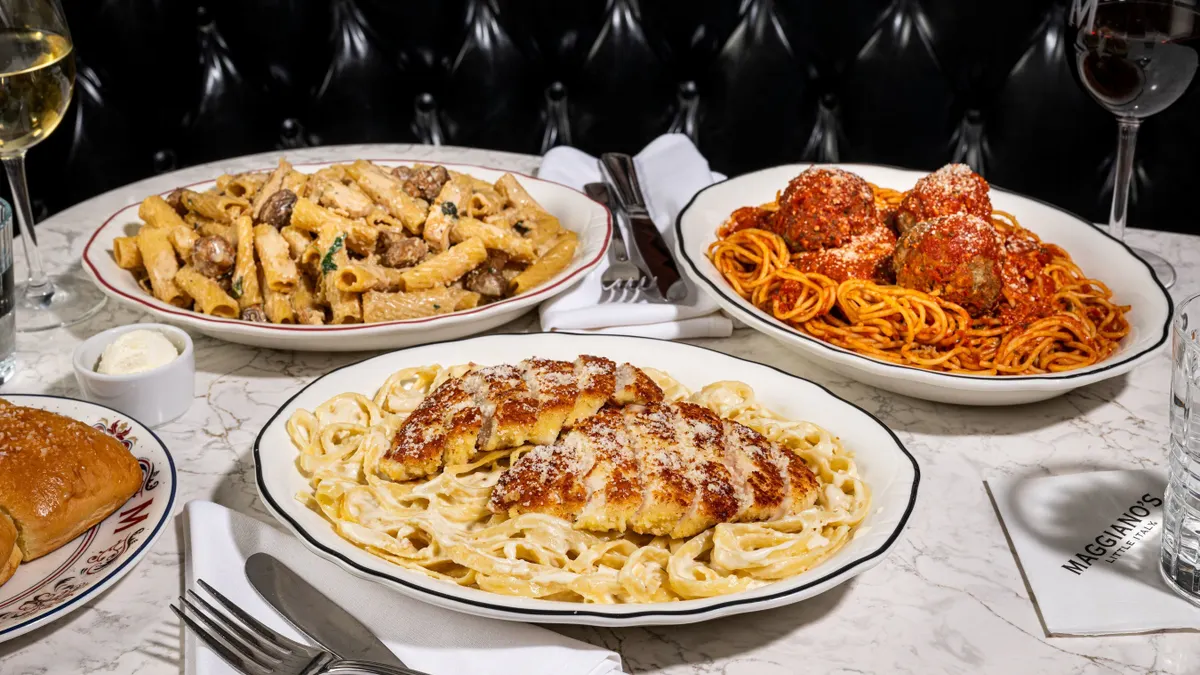
- Chili’s sister brand Maggiano’s Little Italy is increasing the portion size of its pasta entrees by about 20% and increasing the protein served with those dishes, without raising prices, in a bid to boost consumer perceptions of value.
- The brand is also adding 15 dishes to the options available on its Family Style menu, a four-course menu meant to feed parties of four or more.
- The changes reflect efforts by parent company Brinker International to replicate Chili’s successful sales turnaround at Maggiano’s.
Dive Insight:
The Italian chain saw its comparable sales drop by 2.4% last quarter, per Brinker’s earnings report for Q2 of fiscal 2026. The brand is in the middle of a multi-pillar revival effort called “Back to Maggiano’s,” outlined by Brinker CEO Kevin Hochman on the company’s fiscal Q1 earnings call. Hochman said the chain deviated from its historical identity and needed to return to fundamental strengths.
“We lost a little bit of what the North Star of Maggiano's is, which is when it was at its best, these are over-the-top portions, very shareable plates,” Hochman said.
At the time, Hochman said increases in portion sizes for pasta and appetizers would not significantly increase the cost of goods sold.
Adding more items to the Family Style Menu, which allows groups to order two salads, two appetizers, four entrees and three desserts, increases the flexibility of that menu category. Hochman said in the announcement that this too was intended to strengthen Maggiano’s position as a warm, family-style dining choice with significant value.
Brinker has made a number of executive changes intended to support Maggiano’s turnaround over recent quarters. In March, Brinker promoted George Felix, Chili’s chief marketing officer, to a companywide post that would enable him to translate some of Chili’s value-oriented success to Maggiano’s. The chain also installed one of Chili’s regional operations vice presidents as chief operating officer at Maggiano’s in August. But the brand turnaround efforts haven’t yet yielded a major gain in sales.
The brand’s small size — 48 units — and emphasis on shareable group dining, particularly for families, make it more difficult to achieve the shocking traffic gains seen at Chili’s, which was able to leverage price competitiveness with QSR burgers into blockbuster national marketing plays.
“I don't think it's going to be as fast or as dramatic as Chili's just because we don't have this shot in the arm to get a bunch of traffic,” Hochman said during the fiscal Q1 2026 earnings call. “Over time, I think we'll see it stabilize and start to grow.”